
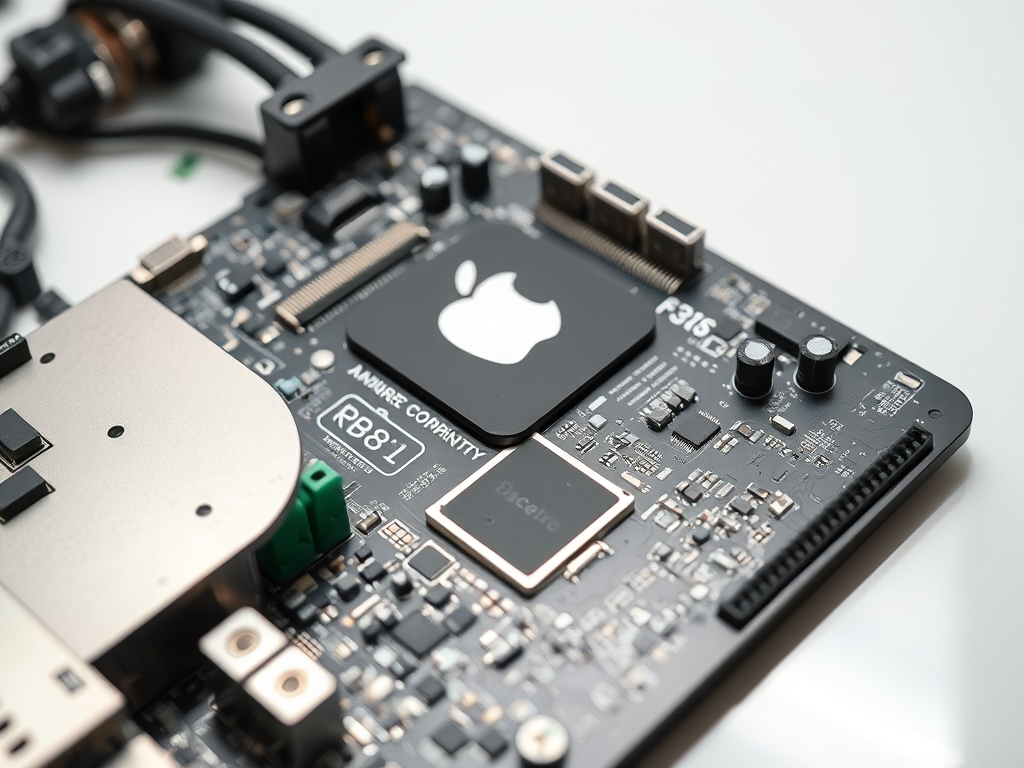
The Apple Logic Board is the core component of Apple devices, integrating key components such as processors, memory, storage, and I/O interfaces. With the advancement of technology, Apple motherboards continue to evolve in design and functionality. The following are their main features and development trends:
- Highly integrated
SoC design: Apple’s self-developed M1, M2 and other chips adopt SoC architecture, which integrates CPU GPU、 Integrating memory and other components together improves performance and reduces power consumption.

Modular design: Motherboard design tends towards modularity, making it easy to maintain and upgrade.
- Performance improvement
Self developed chips: Apple is gradually shifting from Intel processors to self-developed M-series chips, with significantly improved performance, especially in graphics processing and AI tasks.
Neural Network Engine: The M-series chip is equipped with a built-in neural network engine to accelerate machine learning tasks.
- Energy saving and heat dissipation
Low power design: The M-series chips adopt ARM architecture, with significantly lower power consumption than traditional x86 chips, extending device battery life.
Efficient heat dissipation: The motherboard design optimizes heat dissipation to ensure stable operation under high performance.
- Storage technology
High speed SSD: Apple devices use high-speed SSDs, which greatly improve read and write speeds, especially on M-series chip devices.
Unified memory architecture: The M series chips adopt a unified memory architecture, with CPU and GPU sharing memory to improve data transmission efficiency.
- Connectivity
Thunderbolt/USB 4: Supports high-speed data transmission and external device connection.
Wi-Fi 6/6E: Supports the latest Wi Fi standards and provides faster wireless network speeds.
5G support: Some devices support 5G networks to improve mobile network connection speed.
- Security
Security chip: Built in security area in T2 or M series chips, providing hardware level encryption and secure boot function.
Biometric recognition: integrates Touch ID or Face ID modules to enhance device security.
- Compact design
Miniaturization: Motherboard designs are becoming increasingly compact, especially in the new MacBook and iMac models, with smaller volumes and stronger performance.
Flexible circuit board: Some devices use flexible circuit boards to improve internal space utilization.
- Environmental Protection and Sustainability
Environmentally friendly materials: Apple uses more recyclable materials in motherboard manufacturing to reduce environmental impact.
Energy efficiency improvement: The motherboard design focuses on energy efficiency, reduces overall power consumption, and complies with environmental standards.
- Maintenance and Upgrade
Modular design: The motherboard design of some devices tends to be modular, making it easy to maintain and replace.
Repair difficulty: The highly integrated design increases the difficulty of repair, and Apple provides official repair services.
- Future Trends
More advanced manufacturing processes: In the future, Apple chips will adopt more advanced manufacturing processes to further enhance performance and energy efficiency.
AI and Machine Learning: The motherboard will integrate more AI and machine learning functions to enhance the level of device intelligence.
Augmented Reality (AR): With the development of AR technology, motherboards will support more AR applications and provide stronger computing power.
summary
Apple motherboards are constantly improving in terms of high integration, performance enhancement, energy-saving and heat dissipation, storage technology, connectivity, security, compact design, and environmental sustainability. In the future, they will continue to lead industry innovation, providing stronger performance and better user experience.

 JoyKingdisplays.com
Leave a comment